.png)
BLOG POST
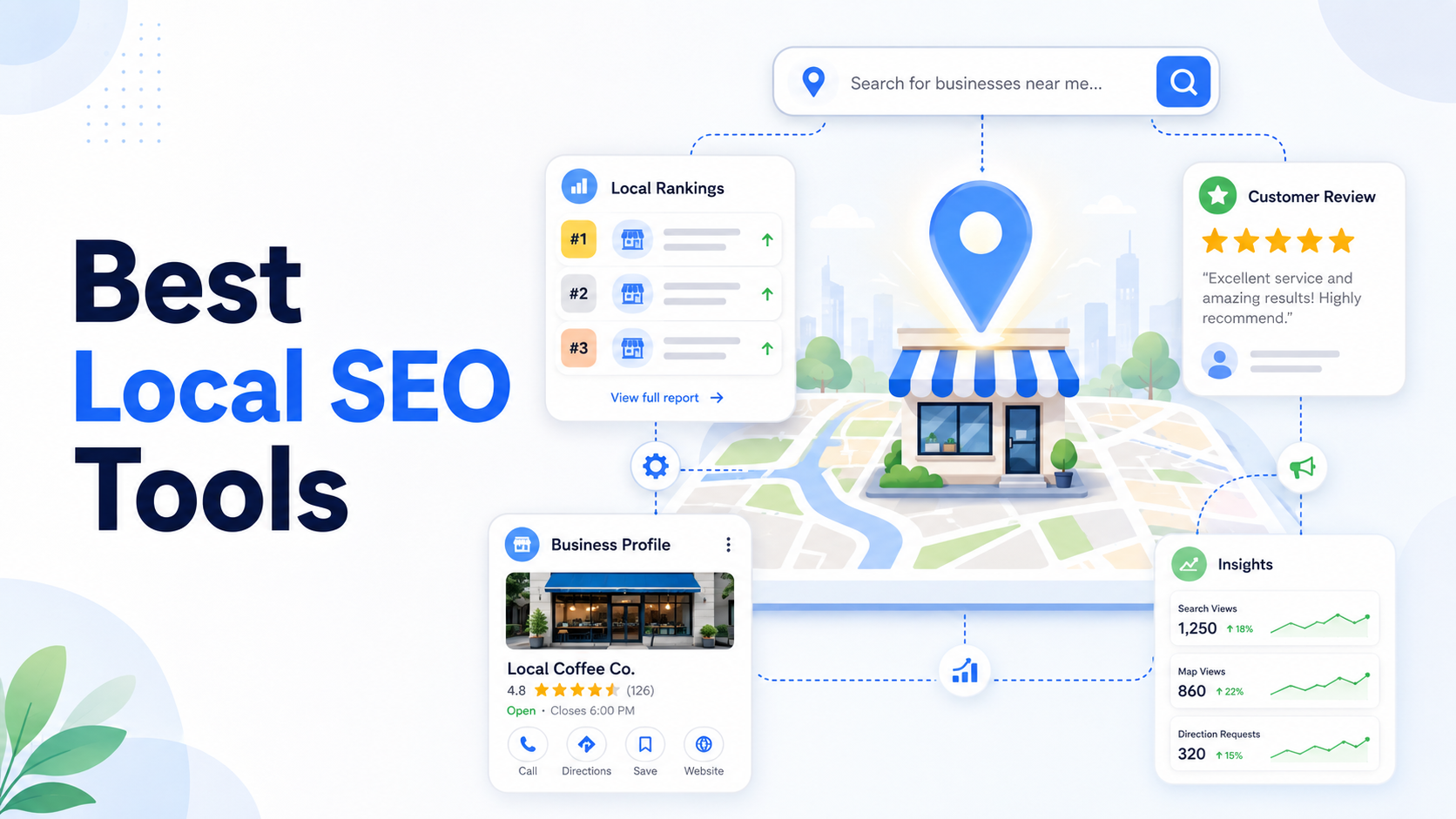
Reviews are the single most underleveraged local SEO signal for most businesses. Owners and agencies focus extensively on Google Business Profile completeness, citation consistency, and on-page optimization — all genuine ranking factors — while neglecting the review signals that often carry more weight in actual local rankings. Businesses that systematically build review depth, with the right velocity and content patterns, dominate local 3-pack rankings in their service areas while competitors with technically-perfect GBPs but thin review profiles lose visibility they don't realize they're missing.
This isn't a guess. Industry correlation studies from Moz, BrightLocal, Whitespark, and others consistently rank review signals among the top factors affecting local rankings — typically in the top 5, sometimes the top 3, depending on the specific signal. Practitioner experience across thousands of businesses confirms the pattern: investing in review depth produces ranking improvements that persist over time, while neglecting reviews caps a business's local visibility regardless of other optimization work.
The complication is that Google doesn't publish the specific weighting of review signals or how they interact with other ranking factors. Most of what's known comes from correlation analysis, official statements, patent filings, engineer comments, and large-scale practitioner observation. The post that follows describes the ranking dynamics with appropriate calibration — what's well-established, what's strongly indicated by evidence, and what's reasonable inference from observed behavior. SEO-aware readers will recognize the difference; the framing throughout reflects that distinction honestly.
This guide is the practical reference for SEO-aware owners and agencies on how reviews actually affect local rankings: how Google's local algorithm works at a high level, the specific review signals that affect ranking, the practical tactics for leveraging reviews to improve search visibility, and how to integrate review-driven SEO into broader local marketing strategy.
Google's local search algorithm is publicly described in three categories that determine ranking for local queries: relevance, distance, and prominence. Understanding the framework matters because it shapes how reviews specifically affect rankings.
Relevance. How well the business matches what the searcher is looking for. Determined by GBP category, services listed, business name, on-page content (for queries that drive searches to websites), and content patterns in reviews. A pizza place ranks for "pizza near me"; a dental practice ranks for "dentist near me." Cross-category matches generally don't happen.
Distance. How close the business is to the searcher's location (or the geographic location specified in the query). Closer businesses rank higher, all else equal. The radius varies by query — high-density urban searches use tight radius; rural searches use much wider radius — but the principle holds. Distance is a strong filter; a business 50 miles from the searcher rarely shows up in results regardless of other signals.
Prominence. How well-known and credible the business is. This is where reviews primarily live, alongside link signals, mention signals (citations and unstructured mentions), brand searches, and other reputation indicators. Prominence is the lever businesses can most directly influence; relevance is mostly determined by setup and content; distance is geography.
The framework is officially described as Google's three local ranking factors. The actual algorithm undoubtedly includes hundreds of signals weighted in specific ways, but understanding the three-factor framing helps explain why review investment produces meaningful ranking gains: it's the most accessible lever for improving the prominence factor, which is the factor businesses can most directly influence.
Several specific review signals affect local rankings. The relative weighting isn't published, but practitioner observation and correlation studies consistently identify the following as significant:
Review count. A direct signal. More reviews indicate more customers, more activity, more verification of business legitimacy. Review count contributes to ranking with diminishing returns — going from 5 to 50 reviews produces substantial ranking improvement; going from 500 to 550 produces less. Most local categories show competitive thresholds where review count starts to matter for top 3-pack placement: 50-100 reviews for smaller markets, 200-500+ for major metros, 1,000+ for highly competitive urban categories.
Star rating. The visible average affects click-through rate substantially (a 4.7-star business gets meaningfully more clicks than a 4.2-star business in the same SERP). Star rating's direct ranking impact is smaller than its click-through impact, but the click-through dynamic has indirect ranking effects (Google notices when listings get clicked more often than expected for their position).
Review velocity. How recently and consistently reviews accumulate. A business adding 5-15 new reviews per month outperforms a business with the same total review count accumulated years ago and currently inactive. Velocity signals current operational quality and active customer base. Some practitioner observation suggests Google specifically penalizes profiles where review activity stalls for extended periods.
Review recency. Recent reviews carry more weight than older ones in both algorithmic ranking and customer perception. A 5-star review from last month means more than a 5-star review from 2019. The decay function isn't published, but practitioner observation suggests reviews from the past 6-12 months carry substantially more weight than older reviews.
Review content keywords. Reviews containing keywords related to specific services and locations help the business rank for those terms. A plumbing company whose reviews disproportionately mention "water heater installation" and "Brooklyn" will rank better for "water heater installation Brooklyn" than a similar company whose reviews mention generic plumbing terminology. This is a documented dynamic — Google extracts content from reviews and uses it as relevance signal.
Review response activity. Businesses that respond to reviews (especially within 24-48 hours) rank better than equivalent businesses that don't. Response activity is a positive signal in itself; it also correlates with overall operational engagement that Google rewards. Responses to negative reviews specifically signal accountability.
Photo reviews. Reviews with photos carry more visibility weight than text-only reviews. They also produce more engagement metrics (longer dwell time, higher click-through), which feeds back into ranking.
Review diversity (reviewer profile diversity). A review base from many different reviewers, with varied posting histories, looks authentic; a review base concentrated among a small number of reviewers or all from new accounts looks suspicious. Google's algorithms detect both patterns and weight authenticity-signaling diversity higher.
Cross-platform review presence. Reviews on Yelp, Facebook, BBB, industry-specific platforms, and other major review aggregators feed into Google's broader knowledge graph. A business with reviews on Google plus Yelp plus Facebook plus industry platforms looks more legitimate to Google's algorithms than a business with reviews only on Google.
Reviewer trust signals. Reviews from reviewers with established posting histories, geographic consistency, and reasonable posting cadence carry more weight than reviews from new accounts, accounts posting from unusual locations, or accounts posting at suspicious volumes. This is part of how Google detects review fraud — if a business's reviews are disproportionately from low-trust reviewer profiles, the algorithm responds.
Mentioned-but-not-rated business citations. Reviews and other content that mention the business by name (without leaving a star rating) still feed into the broader reputation signal. A business mentioned positively in many places — without all those mentions being formal reviews — accumulates ranking benefit.
The combined effect: a comprehensive review profile that delivers on count, velocity, recency, content relevance, response activity, photos, diversity, cross-platform presence, and reviewer trust signals produces ranking benefits that thin or stale profiles can't match. Most local SEO improvement programs underinvest specifically in reviews relative to the ranking lift they produce.
The local 3-pack — the box of three local business results that appears at the top of many local search results pages — is the highest-impact ranking real estate in local search. Capturing 3-pack placement typically generates 4-10x the click-through volume of placement just below it.
Reviews are unusually decisive for 3-pack rankings because:
The 3-pack favors prominence signals heavily. Google selects 3-pack candidates from the broader local results based on a heavier weighting of prominence factors than the broader rankings use. Reviews are a primary prominence input.
Distance becomes less determinative as you reach the 3-pack threshold. For the broader local results, distance is a strong filter. For 3-pack selection, distance is one of several factors with prominence and relevance carrying significant weight. A strongly-reviewed business 4 miles from the searcher can outrank a thinly-reviewed business 2 miles away for 3-pack placement.
3-pack visibility is winner-take-most. Position 1 in the 3-pack gets dramatically more clicks than position 3, which gets meaningfully more than position 4 (the first listing below the 3-pack). The competitive math creates strong incentives to invest in the signals that determine 3-pack ranking, which prominently includes review signals.
A few practical implications:
Aim for 3-pack capture in the specific service-area-plus-query combinations that matter. Most businesses don't need to dominate every possible local query; they need to dominate the queries their best customers use. Identifying the 8-12 specific queries that drive ideal customer acquisition and optimizing review-driven prominence for those queries produces concentrated returns.
Build review depth before competing in higher-traffic queries. In small markets, 50-100 reviews can capture 3-pack placement for niche queries. In major metros, the threshold for top 3-pack placement on high-volume queries is much higher — 500+ reviews competitive, 1,000+ reviews needed for commanding positions.
Review content keywords matter for 3-pack alignment. A roofing company with reviews mentioning "storm damage repair" ranks better for "storm damage roofer" 3-pack placements than a similar company with reviews mentioning generic roofing services.
Active review velocity supports 3-pack stability. 3-pack rankings can shift week-to-week. Active review velocity provides ranking stability; absence of recent reviews creates vulnerability where competitors can leapfrog.
The 3-pack (map pack) and the organic local results below it have different ranking dynamics worth understanding:
Map pack rankings emphasize prominence and proximity heavily. Reviews drive prominence; geographic proximity drives distance. Relevance shapes which businesses qualify for the candidate pool.
Organic local results emphasize traditional SEO factors more. On-page content, link signals, technical SEO, content depth — these matter more for organic rankings than for map pack. Reviews still matter but they're one of several factors competing.
Some queries trigger only one or the other. Highly local-intent queries trigger 3-pack at the top. Informational queries about local topics may only show organic results. The mix varies by industry and query intent.
Different optimization tactics for each. A business optimizing primarily for 3-pack capture invests heavily in reviews, GBP completeness, and citation consistency. A business optimizing for organic local content invests heavily in on-page content, structured data, and link acquisition. Most successful local SEO programs do both.
The practical work of building rank-driving review signals breaks into a few specific areas:
Velocity matters more than total count for ranking purposes, especially for businesses past the basic competitive threshold. A few practical patterns:
Aim for 8-15 new reviews per month for most local businesses. This range supports steady velocity without producing anomalous spikes that look suspicious to Google's algorithms.
For competitive markets, push toward 20-40 monthly reviews. Major metro categories with high competitor review counts require sustained higher velocity to maintain competitive positioning.
Avoid sprints. A burst of 50 reviews in two weeks followed by months of inactivity looks worse to Google than steady accumulation. Spread acquisition activity across the calendar.
Build seasonal balance. Some industries have natural seasonal patterns (HVAC peaks in summer; tax preparation peaks in spring). Build velocity discipline that maintains review accumulation across the calendar — even if quarterly volumes vary, monthly velocity should remain present rather than disappearing entirely in off-seasons.
Use automation to maintain consistency. Automated workflows triggered by completed customer transactions produce more reliable velocity than manual asking, which depends on staff memory and discipline.
Without coaching reviewers (which violates Google's policies and the FTC's 2024 rule), several legitimate techniques encourage review content that includes service-related and location-related keywords:
Verbal asks that prompt natural specificity. "If you have a moment, mentioning what you came in for would help other people in {City} find us when they need similar work" — this kind of framing invites the reviewer to mention the service naturally without explicit coaching.
Email and SMS templates that reference the context. "Thanks for trusting us with your water heater install" in the request message frames the customer's mental model toward that specific service when they're writing.
Service-specific review request workflows. Configuring different review request workflows for different service types means each customer receives a request tied to the work they actually had done. This produces more natural service-specific content than generic review requests.
Time the request to fresh memory. Asking 24-48 hours after service completion captures reviews while specific service details are fresh. Asking weeks later produces vaguer, less keyword-rich content.
The cumulative effect is reviews that authentically describe the customer's experience with specific services in specific locations — which Google extracts as relevance signal for those terms.
Responding to every review (positive and negative) within 24-48 hours produces multiple ranking benefits:
Response activity is itself a positive signal. Google rewards engaged businesses.
Responses can include keywords naturally. "Glad we got your water heater installation handled in Brooklyn — thanks so much, Jennifer!" includes the service and location keywords organically without manipulation.
Responses to negative reviews demonstrate accountability. Even unsatisfying review threads, when handled professionally, signal an attentive business.
Response speed signals current operational health. Profiles with old unanswered reviews look less active.
A practical workflow: 15-30 minutes per week dedicated to responding to recent reviews, with templates for positive responses (warm but generic) and negative responses (acknowledge concern, move offline) ready to deploy. Most businesses underinvest in this discipline relative to its compounding ranking benefit.
Reviews displayed on your website with proper schema markup produce two distinct ranking benefits:
Schema markup signals review content to Google's crawlers. Google can read structured data describing the reviews, the ratings, the reviewer information, and the dates — which feeds into rich snippet eligibility (star ratings appearing in search results) and broader content signals.
Embedded reviews provide on-page content. Pages with embedded reviews have more text content, more keyword variety, and more recency signals than the same pages without reviews. This benefits organic ranking for content-driven queries.
A few specifics:
Most review platforms generate compliant schema markup automatically when their embed widgets are deployed. TrueReview's review widget includes schema markup support, simplifying the implementation.
Photo reviews carry more visibility weight than text-only reviews. A few tactics:
Encourage photos when natural. Service businesses with visible work outcomes (auto detailing, home remodeling, cleaning, landscaping) produce natural photo opportunities. Brief mentions in verbal asks like "if you got a chance to take a photo of the finished work, including it in your review would be great" produce photo content without violating any rules.
For service categories without visible outcomes (medical, financial, legal), photo reviews are less natural but exterior business photos still help.
Don't fabricate photos. Stock photos in fake reviews, generic interior shots presented as customer photos, or AI-generated images all violate platform policies.
Cross-platform review presence strengthens overall reputation signal. Different industries skew toward different platforms; the appropriate mix varies:
Maintaining presence across the relevant platforms — even if Google is the primary investment — feeds into the broader reputation signal Google's algorithms use. TrueReview supports unified monitoring across major platforms, which simplifies the cross-platform management.
A few tactics get repeatedly recommended in SEO content but produce inconsistent results:
Asking customers to use specific keywords. Crosses into review coaching that violates Google's policies and the FTC's 2024 rule. Even if it temporarily improves keyword content, the violation risk is severe.
Mass review requests in short windows. Sprinting velocity creates suspicious patterns that Google's algorithms detect. The short-term lift gets erased by velocity penalties or review removals.
Reviews from employee or family accounts. Conflict-of-interest violations regardless of content quality.
Buying reviews from third-party services. Direct policy violation. Detection improving.
Aggressive review gating. Filtering customers by satisfaction before asking for reviews. Violates platform policies and the FTC rule.
Removing legitimate negative reviews via flagging campaigns. Mass-flagging behavior gets businesses' flags devalued and can attract additional scrutiny.
"Review schemes" promising rankings. Some SEO services market review-buying, review-trading, or review-manipulation schemes that promise rankings. The math has changed: detection rates have improved enough that these schemes accumulate exposure that can produce sudden severe consequences.
The honest framing: legitimate review-driven SEO isn't a workaround that gets ranking results from manipulation. It's the disciplined practice of capturing genuine customer experiences systematically and ensuring they're visible to Google's crawlers in ways that support natural ranking.
Reviews are the single most underleveraged local SEO signal for most businesses, but they aren't the only signal. A complete local SEO program treats reviews as one of several integrated layers:
Google Business Profile completeness. Categories, attributes, services, photos, hours, posts, Q&A — all matter. Reviews land in this context; a complete GBP amplifies review impact.
Citation consistency. Business name, address, phone (NAP) consistent across the major local citation sources (Yelp, Facebook, Apple Maps, BBB, industry-specific directories). Inconsistency creates confusion that hurts rankings independent of review signals.
On-page optimization. For organic local rankings (as opposed to map pack), traditional on-page SEO factors matter — title tags, headings, content depth, internal linking, page speed, mobile experience. Embedded reviews enhance content depth on relevant pages.
Link signals. Local backlinks from relevant local sources contribute to prominence. Press coverage, local sponsorship pages, industry directories, partnerships with related local businesses.
Content strategy. Service pages, location pages, FAQ content, blog content addressing local-relevant queries. Reviews can inform content strategy — review topics indicate what customers actually ask about.
Technical SEO basics. Crawlability, indexability, schema markup (including review markup), page speed, mobile usability.
For agencies and SEO-aware owners, the integration question matters: how should review investment be balanced against other local SEO investments? The general answer for most categories is that reviews are underweighted in typical local SEO budgets relative to their ranking impact. A typical agency local SEO program spending $2,000-5,000/month often allocates 60-70% to citation work, content, and link acquisition with 10-20% on review program management. The math often suggests rebalancing toward 30-40% review investment for businesses past the citation-cleanup phase.
For broader local SEO strategy beyond reviews specifically, multiple other resources cover the integrated approach. Reviews specifically — what this post covers — represent the lever most local businesses can most directly improve to drive ranking gains.
For SEO-aware owners and agencies measuring whether review investment is producing ranking improvements, several metrics matter:
Map pack visibility for target queries. Track ranking position for the 8-12 queries that matter most for ideal customer acquisition. Google Search Console provides some data; specialized local rank tracking tools (BrightLocal, Local Falcon, GeoRanker) provide more granular geographic data.
GBP profile views and engagement. Google Business Profile insights show profile views, search queries that triggered the listing, photo views, direction requests, calls, and website clicks. Increases here typically precede ranking improvements.
Review-attributed conversion. Track how many new customers attribute their finding the business to Google reviews specifically (intake question, website conversion attribution). This provides revenue attribution for review investment.
Recent review velocity. Self-monitor your own review velocity to ensure consistency.
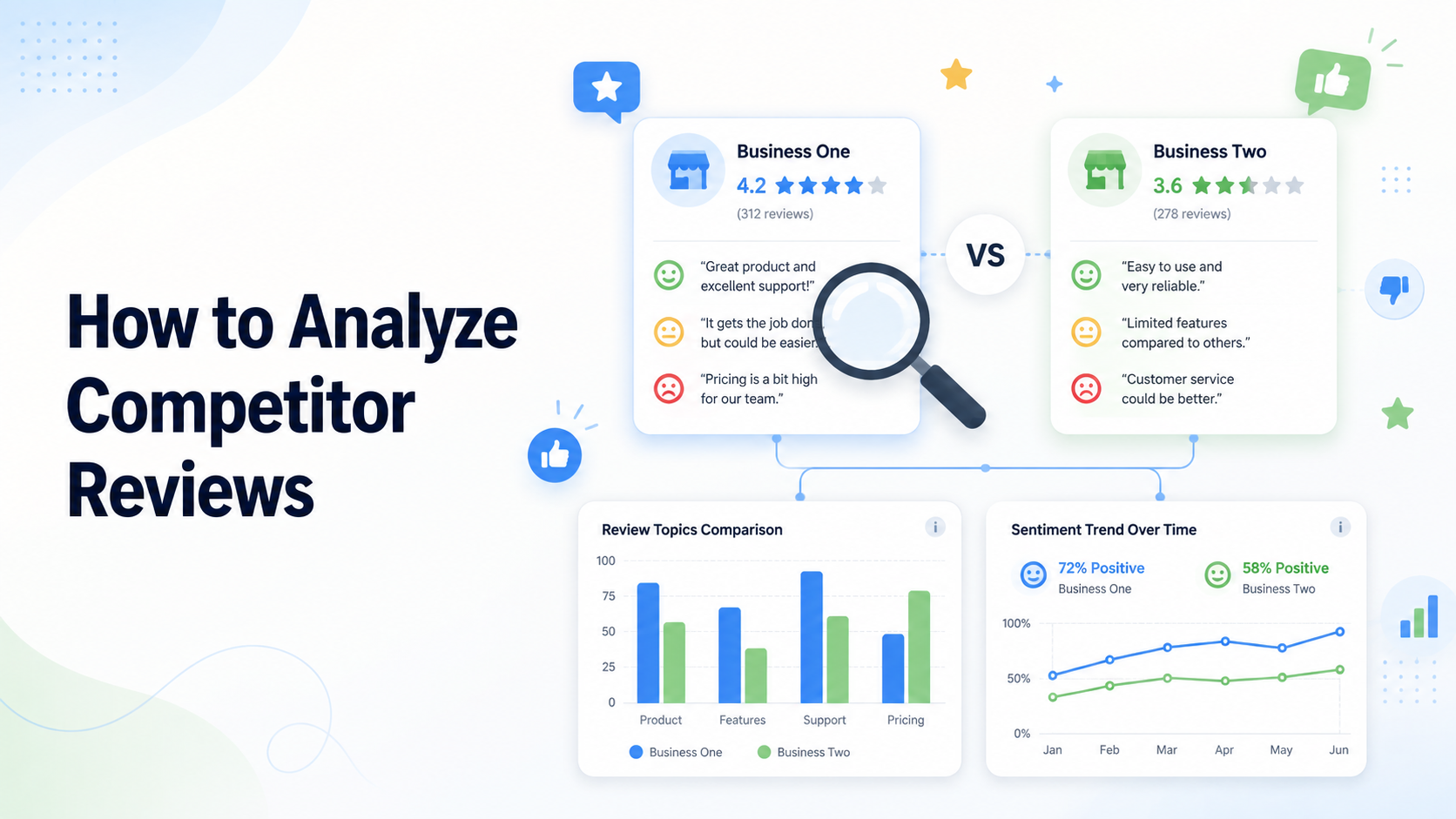
Competitive review benchmarking. Track competitors' review counts, velocity, and ratings. Falling behind competitors in review depth predicts ranking degradation; pulling ahead predicts ranking improvement.
Schema markup validation. Ensure structured data on your website is parsed correctly. Google Search Console flags schema errors.
Local search rank tracking by geographic point. Local rank tracking tools that test rankings from multiple geographic points within your service area provide more accurate ranking data than centralized rank tracking.
The general pattern: review investment produces visible ranking improvement on a 3-6 month timeline, with continued improvement over 12-24 months as review depth compounds. Businesses tracking these metrics see the cause-and-effect clearly; businesses without measurement infrastructure often miss the connection between review work and ranking outcomes.
For SEO-aware owners and agencies, reviews represent the most underleveraged local ranking signal in most local SEO programs. The ranking impact is real and well-documented; the work is straightforward; the timeline produces results within months rather than years.
A complete review-driven local SEO program looks like:
Programs that execute this consistently typically produce visible map pack ranking improvement within 3-6 months and sustained ranking dominance within 12-24 months. The compounding effect across review velocity, content depth, response activity, and cross-platform presence creates ranking moat that competitors can't easily overcome without substantial sustained investment.
For broader complementary content, see our companion posts on the 5-star strategies that actually work in 2026, the industry-specific playbooks roundup, and the compliance reference on review incentives and Google policies. Industry-specific posts in the series cover the calibrated tactics for specific verticals — including dedicated SEO mechanics treatments in our roofing and plumbing posts.
Ready to build a review-driven local SEO program? Start your free 14-day trial of TrueReview — automated SMS and email workflows that maintain consistent monthly review velocity; service-specific request workflows that produce keyword-rich review content; AI-assisted response generation for systematic engagement with positive and negative reviews; embeddable review widgets with built-in Schema.org markup for rich snippet eligibility; unified monitoring and management across Google, Facebook, Yelp, BBB, and major industry-specific platforms; per-location and per-staff dashboards for multi-location and multi-provider operations; and source-tracked review collection that shows you which channels actually produce ranking-affecting review depth. No setup fees, no contracts.