BLOG POST
Google reviews are the single highest-leverage marketing asset most local businesses have. They drive local search rankings, conversion rates, AI-generated search recommendations, and prospect trust simultaneously. The businesses that consistently rank in the local 3-pack and convert prospects into customers are the ones running structured Google review programs — not the ones who occasionally remember to ask. As your review count climbs, you’ll eventually want that history outside Google — to measure month-over-month growth or archive it. This guide shows how to export Google reviews to a CSV in one click, including what each column contains.
This guide covers how to get more Google reviews in 2026: why they matter (briefly), how Google's algorithm actually weights reviews, the compliant request workflow that scales, the seven specific channels that produce results, the operational metrics that compound, and the common mistakes that quietly stall growth. Show customers a few sample Google reviews to set the tone for the kind of feedback that helps.
If you run a restaurant, the same request tactics work even better when paired with the right restaurant feedback software.
Three things changed:
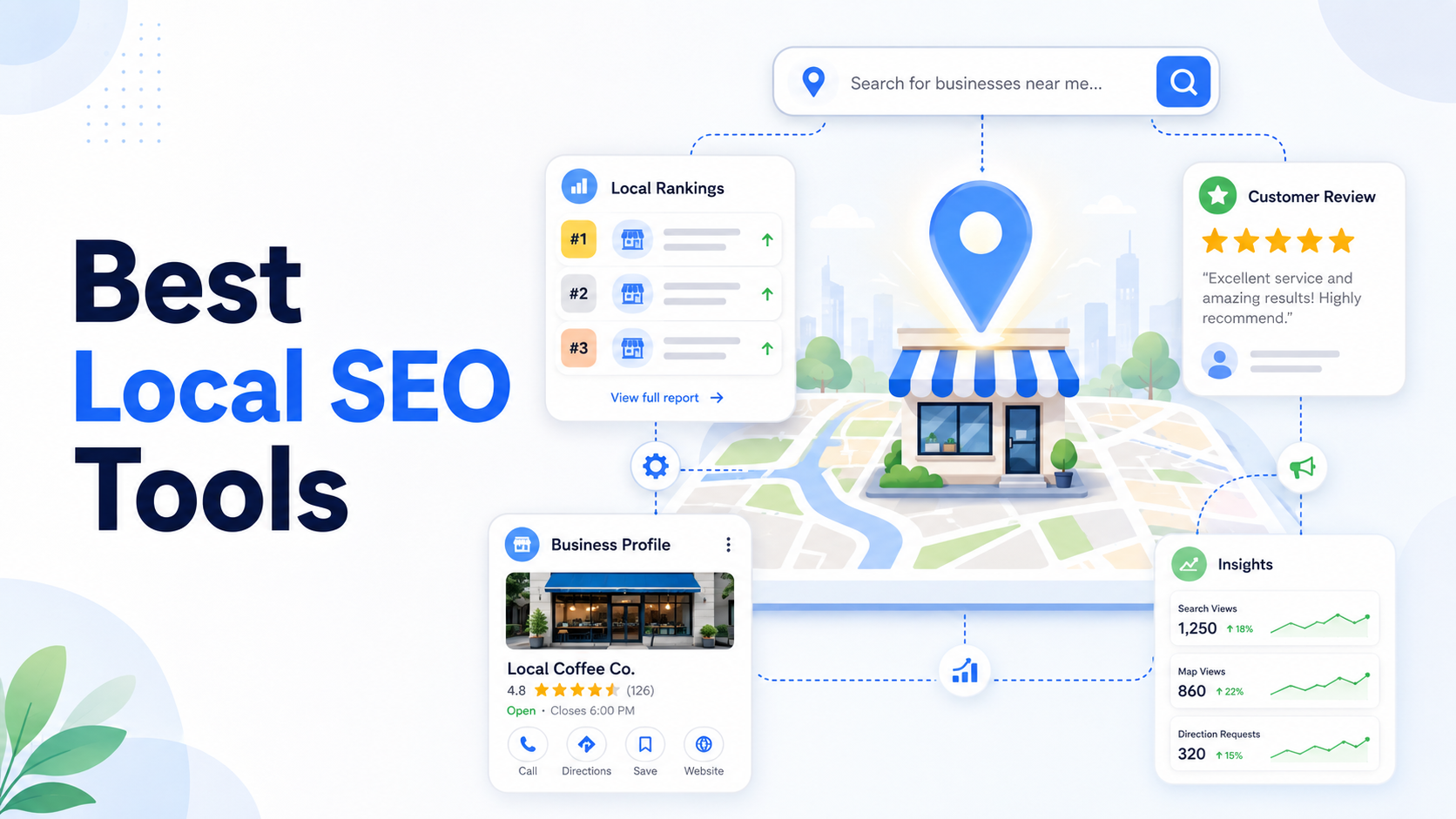
Local search algorithm weight. Google's local algorithm now weighs review signals (volume, recency, rating, response activity) more heavily for the local 3-pack and Maps than it did five years ago. A business with 200 recent reviews at 4.7 stars and consistent response activity will outrank a competitor with 50 stale reviews at 4.2 stars, holding all else equal. The 3-pack is where most prospects stop scrolling — if you're not there, you're invisible.
AI-generated search recommendations. When prospects ask AI assistants (ChatGPT, Perplexity, Google's AI overviews) for local recommendations, the AI doesn't visit your website to evaluate you — it queries structured business data, much of which comes from Google reviews. Weak review profiles are invisible to AI search the same way they're invisible to local pack search.
FTC enforcement. The Federal Trade Commission's Rule on Consumer Reviews took effect in October 2024, making federal-level penalties apply to practices that were previously only platform-level violations — gating, paid reviews, undisclosed insider reviews, AI-generated fake reviews. Civil penalties can reach into the tens of thousands per violation. This raises the stakes on doing it right.
For deeper coverage on the algorithm side, see our complete guide to Google business reviews. For the broader strategic framework across all platforms, see our complete guide to online reviews for businesses.
Most businesses optimize for total review count and ignore the other signals. That's why their numbers look fine on paper but rankings don't move. The signals that actually compound:
Lifetime volume. Pass 100 reviews to break out of the "still building" perception bucket. Beyond 500, additional volume produces diminishing returns relative to recency and response rate.
Monthly velocity. 10-20 new reviews per month is the right baseline for most single-location local businesses. Below that, you fall behind on recency. Above 50 reviews per month for a small business can trigger Google's spam detection if the velocity is unnatural for your size and category.
Average rating. 4.5 stars and above is the comfort zone. 4.0-4.4 is acceptable but starts showing ranking pressure. Sustained sub-4.0 ratings demote profiles meaningfully.
Recency. Profiles with no new reviews in 90 days are demoted in local ranking regardless of lifetime count. Recency outperforms total volume as a signal after the first hundred or so reviews.
Response rate. 90%+ universal response activity (responding to positive, neutral, and negative reviews alike) is the target. Below 70% starts looking inconsistent.
Response time. Within 24-48 hours of posting. Anything past 72 hours signals disengagement.
The takeaway: getting more Google reviews is not just about volume. It's about velocity (steady stream), recency (no 90-day gaps), and response discipline (universal coverage, fast turnaround). The businesses pulling ahead operate all four metrics simultaneously.

TrueReview sends compliant SMS and email review requests to every customer through automated triggers, integrates with 8+ booking and CRM platforms (Mangomint, Boulevard, Vagaro, Zillow, Realtor.com, and more), and surfaces incoming reviews in a unified dashboard with AI-assisted response drafts. Start a free 14-day trial — setup takes about 15 minutes.
The standard pattern that consistently produces results in 2026:
Service completion. Transaction. Appointment. Delivery. The compounding signal is in the immediacy — same-day or within 24 hours produces materially higher response rates than asking three days later, and dramatically higher than asking a week later. The old advice ("wait about a week before asking") is wrong; the customer's experience is freshest in the first 24-48 hours, and the friction of remembering enough detail to write a review climbs steeply after that.
SMS open rates and response rates exceed email by a wide margin for review requests — typically 3-5x. For most local businesses serving general consumers, SMS is the primary channel. Use email for older demographics, longer narrative reviews (some categories produce better written content over email), or when you don't have a phone number on file.
Asking once captures the easiest wins. Asking twice picks up customers who were too busy the first time. Asking more than twice creates frustration and produces diminishing returns. Two is the right number.
This is the part most "reputation management" services get wrong. Filtering customers based on satisfaction before asking — sending a "How was your experience?" survey first, then routing only happy customers to public review platforms — is review gating. It violates Google's policy and the FTC's 2024 Rule. Civil penalties can reach into the tens of thousands per violation. The compliant approach is to ask everyone through the same workflow and let customers self-select whether to write a review.
Send customers directly to your Google review submission page — not your Google Business Profile, which adds an extra click. A direct review link looks like this: https://search.google.com/local/writereview?placeid=YOUR_PLACE_ID. You can also use Google's short URL format from your Business Profile dashboard. The fewer clicks between the request and the review submission, the higher the response rate.
"Hi [Customer Name], thanks for choosing [Business Name] today. If you have a moment, we'd appreciate your honest review on Google: [link]. It helps other neighbors find us. — [Owner Name]" is roughly the right shape. Personalized, brief, polite, no pressure. Critically: no incentive. Offering anything in exchange for a review — discounts, gift cards, contest entries — violates Google's policy and the FTC's Rule even when the incentive isn't conditional on a positive review.
The compliant request workflow above is the foundation. These seven channels are how you actually get the request to customers. Most businesses overweight one or two and miss the others.
Highest-conversion channel for most local businesses. Integrate with your booking system, POS, or CRM so the request triggers automatically the moment a customer event closes. No manual work, no inconsistency. This is the single biggest lever for businesses past 50 customer interactions per month.
Works well for ecommerce, professional services, and any category where customers are more email-engaged than SMS-engaged. Initial request 24 hours after the customer event, polite reminder 3-5 days later if no response, then stop. Same compliance constraints as SMS.
When the customer is verbally happy, ask. "We'd really appreciate it if you'd leave us a Google review — I'll text you the link right now." Don't ask only when the customer is happy (that's gating) — ask everyone, but recognize the moments where the in-person ask carries higher conversion. Have your phone or a card ready with the QR code or short link.
QR codes are the highest-friction-reducing tool for in-person requests. Print on receipts, invoices, business cards, table tents, exit signage. The customer points their phone, lands on the review submission page, and writes. Keep the QR code minimal — no surrounding promotional copy that could imply you're soliciting only positive reviews. "Leave us a Google review" is the right framing.
Every email from customer service, account managers, and sales reps should have a discreet "Leave us a Google review" link in the signature. Low-volume but persistent — produces reviews from customers who interact with your business through email rather than transactions.
Add a "Leave us a Google review" link to your website footer and to the confirmation pages customers see after booking, purchasing, or contacting you. These aren't high-conversion channels in isolation, but they capture customers who are already engaged with your brand at moments of high satisfaction.
Periodic social posts asking your audience for Google reviews work for businesses with engaged social followings. Caveat: posting "Leave us a 5-star review" specifies a rating expectation, which violates Google's policy and the FTC's Rule. The compliant framing is "Leave us a Google review" or "We'd love your honest feedback on Google" — no rating specified.
Some negative reviews violate Google's content policy — off-topic content, conflict of interest, harassment, spam patterns. TrueReview's Review Radar feature scans incoming reviews for these violations and guides you through reporting them to Google. (You do the reporting yourself, with guidance — Review Radar surfaces the issue, you decide what to do.) Start a free 14-day trial.
The patterns that show up across businesses with weak review programs:
Review gating. "How was your experience?" surveys that filter out unhappy customers before they reach the public platform. Direct violation of Google's policy and the FTC's 2024 Rule. Still widely practiced in the reputation-management industry, which is why the FTC has been actively enforcing.
Offering incentives. "Leave a review and get $10 off your next visit." Even when the incentive isn't conditional on a positive review, it violates Google's policy and the FTC's Rule. Eventually triggers algorithmic detection and review removal.
Asking only happy customers. A subtle form of gating — targeting your request flow at customers you know are satisfied while excluding those who might be lukewarm. Same compliance exposure as explicit gating; same algorithmic risk.
Specifying a star rating. "Leave us a 5-star review" specifies a rating expectation in advance. Violates Google's policy. The compliant framing is to ask for an honest review without specifying a rating.
Review trading with vendors and partners. "You review my business and I'll review yours" arrangements are specifically prohibited by Google's policy. Easy for Google's algorithm to detect when two businesses' reviewer accounts overlap.
Buying reviews. Review-buying services produce reviews that fail Google's detection eventually. Profiles get hit with mass algorithmic removals; sustained patterns trigger suspension. FTC 2024 Rule made this federally illegal, not just platform-level prohibited.
Inconsistent response activity. Responding only to positive reviews (looks selective), only to negative reviews (looks defensive), or only when there's time (looks performative). Universal response activity is the signal Google's algorithm reads as operational discipline.
Asking too late. Waiting a week or more after the customer event loses the immediacy advantage. Customers forget specifics, lose enthusiasm, and never get around to it. Ask within 24-48 hours of the customer event.
One-channel reliance. Only sending SMS requests, or only relying on QR codes, or only mentioning it verbally. Each channel reaches a different subset of customers; the businesses pulling ahead run three or four channels simultaneously.
Manual workflow that breaks under volume. Personal asks work fine at 20 customer interactions per month. Past 100, manual asks become impossible to maintain consistently — some weeks you ask everyone, some weeks you ask no one. The result is a flat review velocity that never moves the algorithm. Software-driven automation is the natural evolution past that threshold.
Getting reviews is half the equation. Responding to them — consistently, universally, on a 24-48 hour cadence — is the other half. Universal response activity is a real ranking signal in Google's local algorithm, and it's the signal future prospects read before they call.
Positive reviews: Thank the reviewer by name, reference something specific from their review, keep it short. The audience is future prospects scanning your response patterns.
Neutral reviews (3 stars): Acknowledge what worked, address what didn't, offer to take the conversation private to improve. These are the highest-leverage responses — the reviewer is on the fence, and a thoughtful response often converts the rating upward.
Negative reviews: Acknowledge the experience, apologize for what's apologizable, offer a path forward, don't get defensive. The audience for your negative-review response isn't the original reviewer — it's every future prospect who reads the thread. About one-third of unhappy reviewers will update or delete their negative review after a thoughtful response.
For a deep dive with 30+ ready-to-use templates organized by industry and review type, see our review response templates guide.
Some negative reviews aren't legitimate criticism — they violate Google's content policy (off-topic, conflict of interest, hate speech, spam patterns, harassment, personal information). These can be flagged for removal through Google's standard reporting process within 3-7 business days. For details, see our guide to removing bad Google reviews.
Some industries have additional layers that change how the request workflow works.
Healthcare. HIPAA constrains what providers can say in responses. You can't confirm someone is a patient, reference specific treatments, or acknowledge specific visits. Healthcare review programs need workflow design that builds these constraints in. For deeper coverage, see our healthcare reputation management guide.
Legal services. Attorney-client privilege and state bar advertising rules constrain what attorneys can say in responses to client reviews. Most state bars require avoiding any disclosure that could violate confidentiality. Many state bars also have specific rules about how attorneys can solicit reviews — check your jurisdiction. For coverage, see our reputation management for criminal defense attorneys guide.
Financial services. Investment advisers operating under the SEC's 2021 Marketing Rule can use testimonials with appropriate disclosures. FINRA-regulated broker-dealers have additional constraints. State-specific testimonial rules add another layer.
Real estate. Zillow and Realtor.com reviews carry as much weight as Google for residential agents in most markets — consider running parallel workflows on both. For coverage, see our guide to Zillow and Realtor.com reviews.
Restaurants and hospitality. Google + Yelp + TripAdvisor is the standard mix. Yelp's strict solicitation policy means SMS or email asks routed to Yelp risk filtering as "not recommended" — route requests to Google primarily and let Yelp reviews come organically. For coverage, see our guide to Google restaurant reviews.
Home services. Google + BBB + Angi + HomeAdvisor matter for trust-sensitive high-ticket work. In-person QR codes on invoices and door hangers still produce significant volume here in ways they don't in digital-first verticals.
Salon, spa, and medical spa. Mangomint, Boulevard, and Vagaro reviews carry meaningful weight inside the booking ecosystem alongside Google. Integration with the booking platform lets requests trigger automatically when appointments close.
Deeper coverage by topic:
The pillar framework: our complete guide to review management covers the five-pillar operational framework (collect, monitor, respond, analyze, comply) in detail.
Google specifically: our complete guide to Google business reviews covers how Google's algorithm displays and ranks reviews. Our guide to Google Business Profile optimization covers the broader profile mechanics.
Online reviews broadly: our complete guide to online reviews for businesses covers the multi-platform landscape.
Platform selection: our guide to the best review sites for local businesses covers which platforms to prioritize by vertical.
Asking and responding: our guide to asking for reviews covers the compliant request flow in depth. Our review response templates guide has 30+ ready-to-use templates.
Removing problematic reviews: our guide to removing bad Google reviews.
By industry: healthcare, legal, real estate, restaurants.
Five things to operationalize, in order of leverage:
Getting more Google reviews isn't a marketing tactic. It's an operational discipline that compounds over months into measurable gains in local search rankings, conversion rates, and customer retention. The businesses pulling ahead in their local market are the ones with structured automated workflows, universal compliant request coverage, and 24-48 hour response cadences. The ones falling behind are the ones still doing manual asks when they remember.
TrueReview automates compliant SMS and email Google review requests with one initial ask and one polite reminder. Integrates with Mangomint, Boulevard, Vagaro, Zillow, Realtor.com, and 8+ other booking and CRM platforms. AI-assisted response generation with human-review workflow. Review Radar surfaces Google policy violations. HIPAA-aware workflows for healthcare with BAAs available. Agency and multi-location support with white-label options. Start a free 14-day trial — setup takes about 15 minutes.