BLOG POST
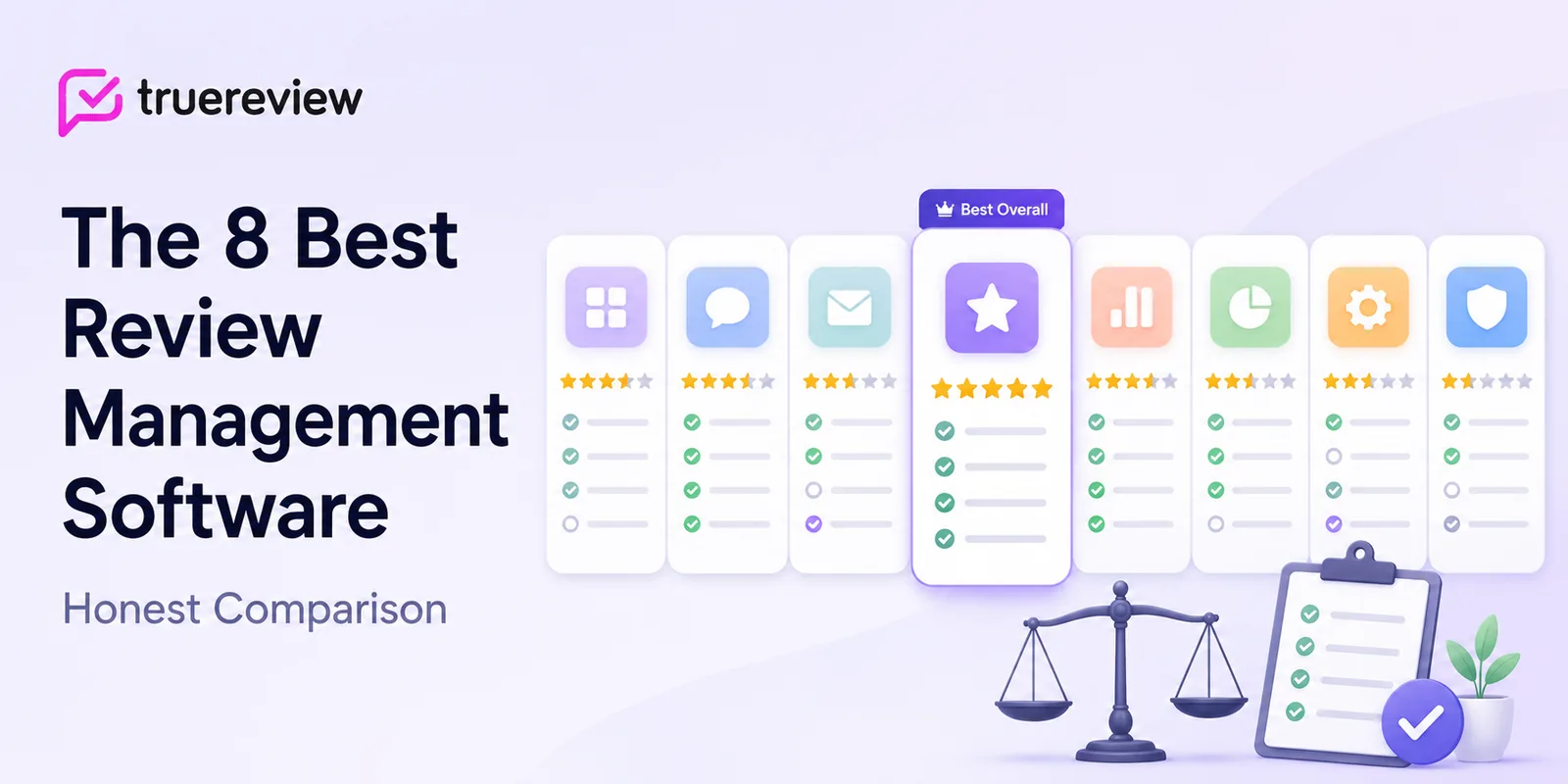
"Best review management software" has no single right answer, because a solo dentist, a 200-location franchise, and an agency managing 80 clients need very different things. This guide is an honest, informational comparison of eight leading platforms: what each is genuinely good at, where each fits, and how to choose. Every tool here is capable — the goal is matching one to your situation, not crowning a universal winner.
We compared the platforms on the dimensions that actually determine whether review software pays off:
| Tool | Best for | Strength | Pricing style |
|---|---|---|---|
| TrueReview | SMBs & agencies | Fast setup, compliance-first, affordable | Transparent, monthly/annual |
| Birdeye | Mid-market & enterprise | Broad all-in-one feature suite | Quote-based |
| Podium | Businesses wanting messaging | Customer messaging + reviews | Quote-based |
| NiceJob | Small service businesses | Simple, automation-focused | Transparent |
| GatherUp | Agencies | Multi-client management | Per-location |
| Grade.us | Agencies & marketers | White-label workflows | Tiered |
| Reputation.com | Large enterprise | Enterprise-scale analytics | Enterprise quote |
| Trustpilot | E-commerce & DTC | Trustpilot-native reviews | Freemium + paid |
Pricing styles and positioning reflect general market information and can change — check each vendor for current details.
TrueReview is review request automation built for local businesses and agencies, with a compliance-first design. It sends every customer a 1-tap review request by SMS and email, monitors Google plus 8+ platforms in one dashboard, and drafts AI-assisted replies you approve before posting. Its calling cards are fast setup (about 15 minutes), transparent pricing, and a workflow that never includes gating — it asks every customer, consistent with Google's policy and the FTC's 2024 Rule. Strong fit for SMBs and agencies that want results quickly without an enterprise contract. See pricing.
Birdeye is a broad, all-in-one customer experience platform spanning reviews, listings, surveys, messaging, and more. Its strength is breadth — it's a lot of capability under one roof, which suits mid-market and enterprise teams that want a single comprehensive system. That breadth comes with higher cost and a longer ramp, so it's most worthwhile when you'll use the wider feature set rather than just review collection.
Podium centers on customer communication — its messaging and texting tools are well-regarded — with review generation built around that messaging core. It's a good fit for businesses that want a unified inbox for customer conversations and see reviews as one part of that. As with other all-in-one suites, pricing is quote-based and reflects the broader platform.
NiceJob focuses on straightforward review automation for small service businesses, with an emphasis on simplicity and ease of use. If you want reviews on autopilot without a complex platform to learn, it's an approachable option with transparent pricing.
GatherUp is built with agencies in mind, with strong multi-client and multi-location management. Agencies running review programs for many clients value its organization and reporting. Per-location pricing scales with the number of profiles you manage.
Grade.us is popular with agencies and marketers for its white-label workflows and drip-style review campaigns. It's designed to be rebranded and resold, which makes it a fit for agencies productizing review management as a service.
Reputation (Reputation.com) targets large enterprises and big multi-location brands, with deep analytics and enterprise-grade reporting. It's the heaviest platform on this list, suited to organizations with the scale and budget to use enterprise tooling fully.
Trustpilot pairs its own widely-used review platform with business tools for collecting and displaying Trustpilot reviews. It's strongest for e-commerce and direct-to-consumer brands, where Trustpilot carries significant weight, and offers a freemium entry with paid tiers for invitations and widgets.
Pricing models split into three groups. Transparent, published pricing (TrueReview, NiceJob) lets you size cost up front and tends to suit SMBs. Quote-based suites (Birdeye, Podium, Reputation.com) reflect broader platforms and usually involve a sales conversation and annual contract. Per-location or tiered (GatherUp, Grade.us, Trustpilot) scales with profiles or feature level, which fits agencies and growing multi-location operations. Match the model to how you buy: if you want to start fast and self-serve, transparent pricing wins; if you need a wide platform and have budget, quote-based suites deliver breadth.

TrueReview pairs fast setup and transparent pricing with a genuinely compliance-first workflow: automated SMS + email requests, multi-platform monitoring, AI-assisted replies, and HIPAA-aware options for healthcare. Start a free 14-day trial.
Collection is only half the job — response rate is what prospects actually notice when they land on your profile. If you're weighing tools for this, our roundup of the google review software that actually gets replies compares the leading options.
And if your needs extend past reviews into listings, monitoring, and brand mentions, for a full breakdown, see the reputation management tools.
There's no universal "best" review management software — there's the best fit for your size, vertical, budget, and how much compliance matters to you (it should matter a lot). SMBs and agencies that want fast, affordable, compliance-first automation tend to land on TrueReview; enterprises lean toward broad suites like Birdeye or Reputation.com; e-commerce brands gravitate to Trustpilot. Start from your own situation, insist on a tool that asks every customer, and try before you buy.